
Crypto Wallet Explained: Everything Beginners Need to Know
Introduction
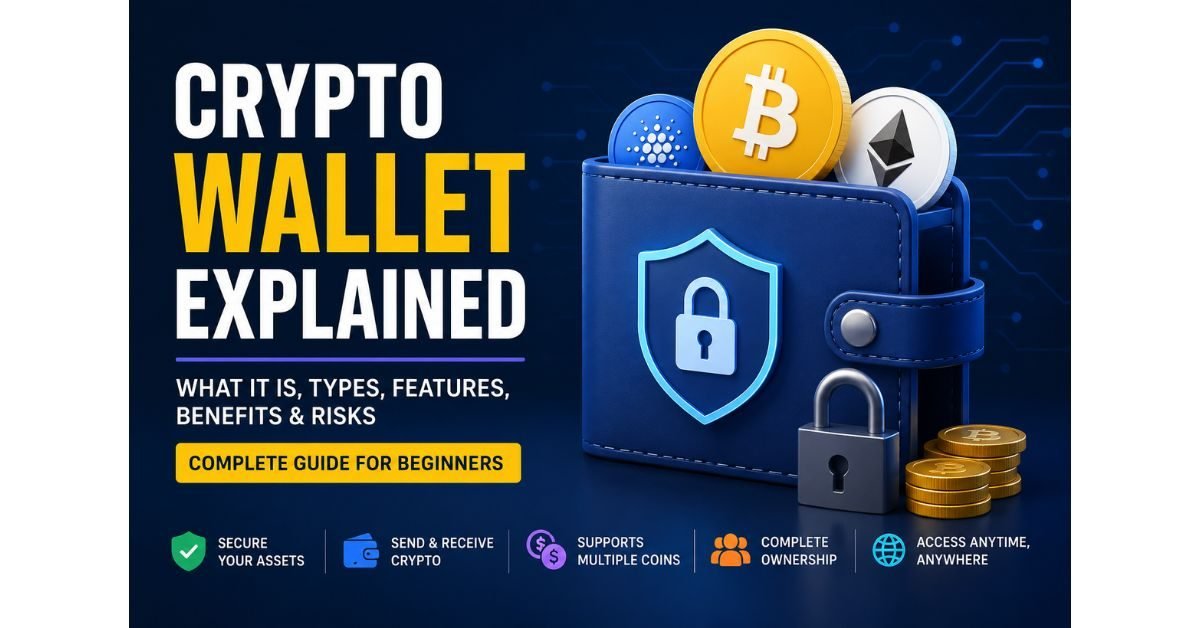
If you’re planning to invest in Bitcoin, Ethereum, or any other cryptocurrency, the first thing you’ll need is a crypto wallet. Think of it as your digital vault that stores the keys to your cryptocurrency and allows you to send, receive, and manage digital assets securely.
With the growing adoption of cryptocurrencies worldwide, understanding how a crypto wallet works has become essential for every investor. This guide explains everything beginners need to know—from its meaning and features to benefits, risks, and best practices.
What Is a Crypto Wallet? (Meaning)
A crypto wallet is a digital application or physical device that securely stores the private and public keys used to access and manage cryptocurrency on the blockchain.
Unlike a traditional wallet that stores physical cash, a crypto wallet doesn’t hold your coins directly. Instead, it stores the cryptographic keys that allow you to access and control your digital assets.
Simply put:
A crypto wallet is your secure gateway to buying, storing, sending, and receiving cryptocurrencies.
Key Points
- Stores public and private keys securely
- Supports multiple cryptocurrencies
- Enables sending and receiving crypto
- Available as software and hardware wallets
- Essential for protecting digital assets
- Provides complete ownership of your cryptocurrency
Visual Introduction
| Traditional Wallet | Crypto Wallet |
|---|---|
| Stores cash | Stores digital keys |
| Physical | Digital or hardware device |
| Used for payments | Used for crypto transactions |
| Managed by you | Secured by cryptographic keys |
Main Features of a Crypto Wallet
- Secure storage of private keys
- Send and receive cryptocurrencies instantly
- Multi-currency support
- Backup and recovery using a seed phrase
- QR code payments
- Integration with decentralised applications (DApps)
- Two-factor authentication (2FA) support
- Transaction history and portfolio tracking
Benefits of Using a Crypto Wallet
1. Complete Ownership
You have full control over your digital assets without relying on a bank.
2. Enhanced Security
Private keys remain protected through encryption and advanced security measures.
3. Global Accessibility
Access your cryptocurrency anytime from anywhere with an internet connection (for software wallets).
4. Fast Transactions
Transfer crypto across the world within minutes.
5. Supports Multiple Coins
Many wallets allow users to store Bitcoin, Ethereum, Solana, USDT, and many other cryptocurrencies in one place.
Quick Insights Table
| Feature | Benefit |
|---|---|
| Private Key Storage | Secure ownership |
| Public Address | Receive cryptocurrency |
| Seed Phrase | Wallet recovery |
| Multi-Coin Support | Manage multiple assets |
| Hardware Security | Protection from hackers |
| DApp Integration | Access Web3 applications |
Types of Crypto Wallets
| Wallet Type | Best For |
|---|---|
| Hot Wallet | Daily transactions |
| Cold Wallet | Long-term storage |
| Mobile Wallet | Beginners |
| Desktop Wallet | Personal computers |
| Web Wallet | Quick access |
| Hardware Wallet | Maximum security |
Real Example
Imagine Rahul purchases Bitcoin worth ₹10,000.
Instead of leaving it on a cryptocurrency exchange, he transfers it to his personal crypto wallet.
Only Rahul has access to the wallet’s private key, meaning he controls his investment. Even if the exchange experiences issues, Rahul’s crypto remains secure in his own wallet.
Small Case Study
Scenario
Priya invested in Ethereum and kept it on an exchange.
After learning about self-custody, she moved her assets to a hardware wallet and securely stored her recovery phrase offline.
As a result, her funds remained protected even during periods of exchange uncertainty.
Lesson: Owning your wallet means owning your cryptocurrency.
Deep Explanation
Every crypto wallet consists of two important components:
Public Key
Think of it as your account number. You can safely share it with others to receive cryptocurrency.
Private Key
Think of it as your password. It gives you complete control over your assets and should never be shared with anyone.
If someone gains access to your private key, they can transfer your cryptocurrency without your permission.
Risks of Using a Crypto Wallet
Although crypto wallets offer excellent security, users should understand the associated risks.
- Losing your recovery phrase
- Sharing your private key
- Falling victim to phishing websites
- Installing fake wallet applications
- Malware attacks
- Sending crypto to the wrong wallet address
Most security issues occur because of user mistakes rather than problems with the wallet itself.
Why Is a Crypto Wallet Important?
A crypto wallet is essential because it gives users complete ownership and control over their digital assets.
Without a wallet, investors depend on third-party platforms to safeguard their cryptocurrency.
Using your own wallet reduces reliance on intermediaries and aligns with one of cryptocurrency’s core principles—decentralisation.
Current Trends
The crypto wallet industry continues to evolve rapidly.
Current trends include:
- AI-powered security monitoring
- Multi-chain wallet support
- Biometric authentication
- Web3 integration
- NFT storage capabilities
- Social recovery wallets
- Hardware wallets with Bluetooth connectivity
These innovations are making crypto wallets more secure and user-friendly.
Common Mistakes to Avoid
- Storing your recovery phrase online
- Sharing your private key
- Downloading wallets from unofficial websites
- Ignoring software updates
- Using weak passwords
- Keeping large investments on exchanges
Pro Tips
- Enable Two-Factor Authentication (2FA)
- Keep backup copies of your recovery phrase offline
- Use a hardware wallet for long-term investments
- Verify wallet addresses before sending crypto
- Download wallets only from official sources
- Regularly update wallet software
Expert Quote
“Not your keys, not your coins.” — A widely recognised principle in the cryptocurrency community, reminding investors that true ownership comes from controlling their own private keys.
Step-by-Step Guide
Step 1
Choose a trusted crypto wallet.
Step 2
Download it from the official website or app store.
Step 3
Create a new wallet.
Step 4
Securely write down your recovery phrase.
Step 5
Enable Two-Factor Authentication if available.
Step 6
Transfer cryptocurrency into your wallet.
Step 7
Never share your private key with anyone.
Future Outlook
As cryptocurrency adoption continues to grow, crypto wallets will become more intelligent, secure, and easier to use. Future developments are expected to include AI-assisted fraud detection, enhanced biometric authentication, seamless cross-chain support, and greater integration with decentralised finance (DeFi) and Web3 ecosystems.
Conclusion
A crypto wallet is one of the most important tools for anyone investing in cryptocurrency. It provides secure access to your digital assets, gives you complete ownership through private keys, and enables safe participation in the growing blockchain ecosystem.
Whether you’re a beginner or an experienced investor, choosing the right crypto wallet and following security best practices can help protect your investments for years to come.
Frequently Asked Questions (FAQ)
1. What is a crypto wallet?
A crypto wallet is a digital tool that stores the private and public keys needed to access and manage cryptocurrency.
2. Is a crypto wallet free?
Many software wallets are free, while hardware wallets require a one-time purchase.
3. Which crypto wallet is best for beginners?
User-friendly mobile wallets with strong security features are generally suitable for beginners.
4. Can I store multiple cryptocurrencies in one wallet?
Yes. Many modern wallets support multiple cryptocurrencies.
5. Is it safe to keep crypto on an exchange?
For long-term holdings, many investors prefer using their own wallet to maintain full control of their assets.
Ready to build your crypto knowledge?
Explore more beginner-friendly cryptocurrency guides, blockchain tutorials, exchange comparisons, and market insights on Acointrix. Stay informed, invest wisely, and make confident decisions in the world of digital assets.