
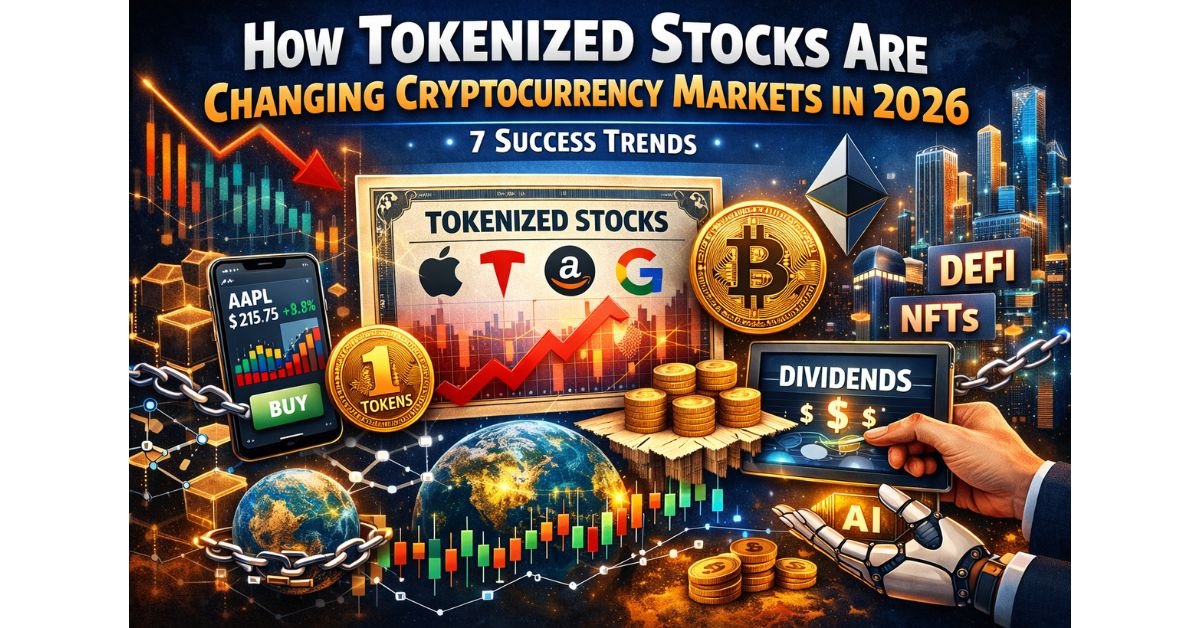
Imagine buying fractions of Tesla or Nvidia shares 24/7 without a traditional broker. Tokenized stocks are making this possible, merging traditional finance with blockchain technology and transforming cryptocurrency markets in 2026.
Introduction
The boundaries between traditional finance and cryptocurrencies are rapidly disappearing. One of the biggest innovations driving this convergence is tokenized stocks.
As institutional investors enter digital assets and blockchain adoption accelerates, tokenized equities are becoming increasingly popular. They offer fractional ownership, round-the-clock trading, and borderless accessibility.
In 2026, tokenized stocks are no longer experimental—they are reshaping the cryptocurrency ecosystem and creating new investment opportunities for global investors.
What Are Tokenized Stocks? (Meaning)
Tokenized stocks are digital representations of traditional stocks issued on blockchain networks.
Each token represents ownership or exposure to an underlying stock, such as:
- Apple
- Tesla
- Nvidia
- Amazon
- Microsoft
Investors can buy and sell these digital assets using cryptocurrencies, allowing access to traditional equity markets without conventional brokerage systems.
Tokenized Stocks Are Changing Cryptocurrency Markets in 2026: 7 Success Trends
1. Enabling Fractional Ownership for Global Investors
Tokenized stocks allow investors to buy fractions of expensive shares like Tesla, Apple, and Nvidia. This lowers entry barriers and opens investment opportunities to people worldwide.
2. Bringing 24/7 Trading to Traditional Assets
Unlike conventional stock markets with fixed hours, tokenized stocks can be traded around the clock on blockchain networks, providing greater flexibility and liquidity.
3. Bridging Traditional Finance and Cryptocurrency
Tokenized stocks are creating a seamless connection between traditional equity markets and digital assets, allowing investors to manage stocks and cryptocurrencies within the same ecosystem.
4. Accelerating Real-World Asset (RWA) Tokenization
The rise of tokenized stocks is driving the broader adoption of real-world asset tokenization, making financial markets more accessible, transparent, and efficient.
5. Expanding DeFi Opportunities
Tokenized equities can integrate with decentralized finance (DeFi) platforms, enabling lending, borrowing, and yield-generating opportunities that are not possible with traditional stocks.
6. Increasing Market Liquidity and Efficiency
Blockchain technology enables faster settlements and reduced intermediaries, improving liquidity and making transactions more efficient compared to traditional financial systems.
7. Driving Institutional Adoption and Future Innovation
Major financial institutions and blockchain companies are embracing tokenized securities, signaling a future where digital assets and traditional investments coexist in a unified financial ecosystem.
Key Points
1. Blockchain-Based Ownership
Stocks are represented digitally on blockchain networks.
2. Fractional Investing
Investors can purchase small portions of expensive shares.
3. 24/7 Trading
Unlike stock exchanges, tokenized assets can be traded around the clock.
4. Global Accessibility
Users worldwide gain easier market access.
5. Increased Liquidity
Tokenization improves market efficiency.
6. Integration with DeFi
Tokenized stocks can interact with decentralized finance protocols.
7. Lower Entry Barriers
Small investors can participate in premium equities.
Features
Fractional Ownership
Buy a portion of expensive stocks.
Smart Contracts
Automated settlement through blockchain.
Faster Transactions
Reduced settlement delays.
Borderless Trading
Access markets from anywhere.
Transparent Ledger
Blockchain improves transparency.
Benefits
Democratized Investing
More people can access global markets.
Lower Costs
Reduced brokerage fees.
Continuous Trading
Available 24/7.
Improved Liquidity
Faster buying and selling.
Portfolio Diversification
Combine crypto and traditional assets.
Quick Insights Table
| Feature | Traditional Stocks | Tokenized Stocks |
|---|---|---|
| Trading Hours | Limited | 24/7 |
| Fractional Ownership | Limited | Yes |
| Accessibility | Regional | Global |
| Settlement Speed | T+1 | Near Instant |
| Fees | Higher | Lower |
| Blockchain Transparency | No | Yes |
Small Case Study
A retail investor with $100 wanted exposure to Nvidia stock.
Traditional broker:
- Minimum requirements
- Market-hour limitations
Tokenized stock platform:
- Fractional ownership
- Instant execution
- Crypto payments
Result:
The investor diversified efficiently with smaller capital.
Real Example
Suppose an investor owns:
- Bitcoin
- Ethereum
- Solana
Using tokenized stocks, they can additionally hold:
- Tesla
- Apple
- Nvidia
All within one blockchain-based ecosystem.
This creates a hybrid portfolio with improved diversification.
Why Tokenized Stocks Matter
Better Accessibility
Investors from emerging markets can access global equities.
Improved Efficiency
Smart contracts reduce intermediaries.
Portfolio Diversification
Combining crypto and stocks reduces concentration risk.
Innovation
Tokenization represents the future of financial markets.
Risks
Regulatory Uncertainty
Rules vary across jurisdictions.
Counterparty Risk
Platform providers introduce trust concerns.
Liquidity Challenges
Some tokenized stocks have lower trading volumes.
Security Risks
Smart contract vulnerabilities exist.
Market Volatility
Underlying assets remain exposed to market fluctuations.
Responsible Investing
Investors should:
✔ Research platforms carefully.
✔ Diversify portfolios.
✔ Understand regulations.
✔ Use trusted exchanges.
✔ Avoid excessive leverage.
✔ Consider long-term investment goals.
Trends in 2026
Institutional Adoption
Large institutions are exploring tokenized securities.
DeFi Integration
Tokenized assets are entering lending protocols.
Real-World Asset Tokenization
RWAs are becoming a trillion-dollar opportunity.
AI and Blockchain
Artificial intelligence enhances risk management.
Multi-Chain Ecosystems
Ethereum, Solana, and Avalanche support tokenized assets.
Common Mistakes
Ignoring Regulations
Compliance is essential.
Concentrated Portfolios
Diversification matters.
Chasing Hype
Invest based on fundamentals.
Using Untrusted Platforms
Security should come first.
Pro Tips
✔ Focus on regulated platforms.
✔ Diversify across sectors.
✔ Monitor liquidity.
✔ Understand smart contracts.
✔ Follow legal developments.
✔ Combine traditional and digital assets wisely.
Expert Quotes
“Tokenization will redefine financial markets over the next decade.”
— Larry Fink, BlackRock CEO
“Blockchain technology is transforming asset ownership.”
— Financial Technology Experts
Step-by-Step Guide
Step 1
Research tokenized stock platforms.
Step 2
Open a compatible crypto wallet.
Step 3
Deposit funds.
Step 4
Select tokenized assets.
Step 5
Diversify your holdings.
Step 6
Monitor risks and regulations.
Step 7
Review portfolio performance regularly.
Future Outlook
By 2030, tokenized assets could become a major component of global financial markets. Institutional participation, regulatory clarity, and blockchain innovation are likely to accelerate adoption.
The convergence of traditional equities and decentralized finance will continue creating new opportunities for investors and businesses alike.
Conclusion
Tokenized stocks are among the most exciting developments in cryptocurrency markets in 2026. They provide global accessibility, lower barriers, and unprecedented flexibility while connecting traditional finance with blockchain ecosystems.
As regulations mature and technology evolves, tokenized assets are poised to become a major pillar of digital finance.
At Acointrix, we bring you the latest cryptocurrency insights, blockchain innovations, DeFi developments, and market trends to help you stay ahead in the evolving digital economy.
Follow Acointrix for expert crypto analysis and future-focused investment insights.
FAQ
What are tokenized stocks?
They are blockchain-based digital representations of traditional shares.
Can tokenized stocks be traded 24/7?
Yes, unlike traditional stock markets.
Which blockchains support tokenized stocks?
Ethereum, Solana, Avalanche, and other smart contract networks.
Are tokenized stocks safe?
They carry regulatory, market, and platform risks.
Why are tokenized stocks important?
They improve accessibility, liquidity, and investment flexibility.