

🚀 Introduction
The world of trading offers endless opportunities, but choosing the right strategy can be overwhelming for beginners. Two of the most popular approaches are Swing Trading and Day Trading. While both aim to generate profits from market price movements, they differ significantly in terms of time commitment, risk, trading style, and potential rewards.
If you’ve ever wondered “Should I choose Swing Trading or Day Trading?”, this guide will help you understand their differences, advantages, and challenges so you can make an informed decision.
Whether you’re trading cryptocurrencies, stocks, or forex, understanding Swing Trading vs Day Trading is essential for long-term success.
📖 What is Swing Trading?
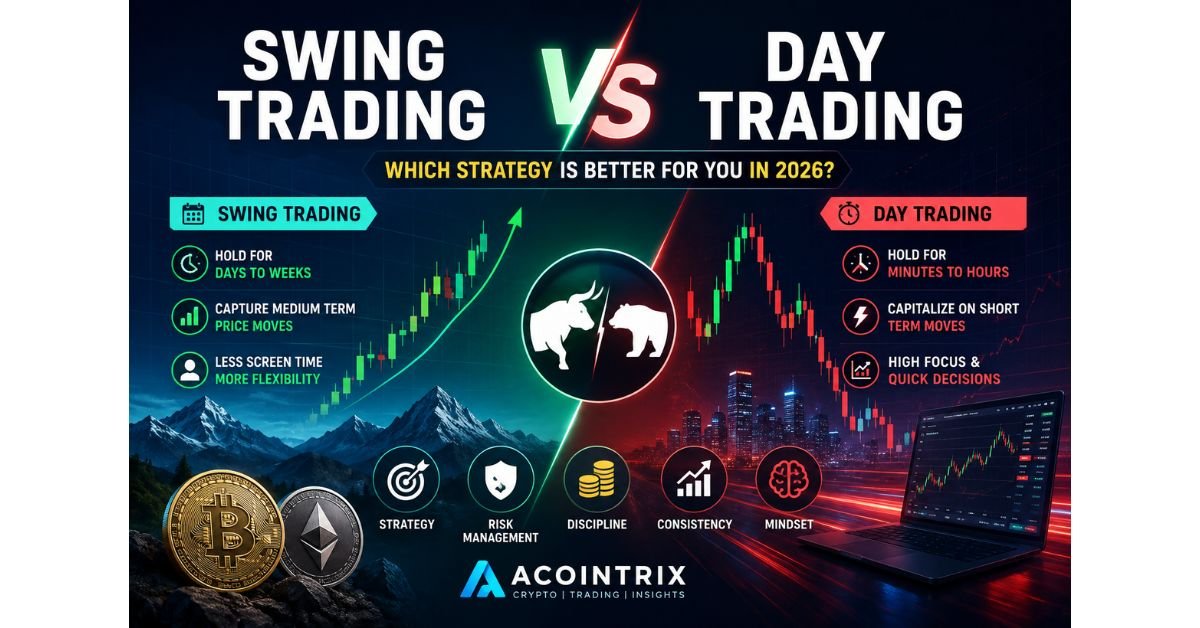
Swing Trading is a trading strategy where traders hold positions for several days or even weeks to capture medium-term price movements.
Instead of making dozens of trades in a single day, swing traders patiently wait for quality opportunities and aim to profit from larger market trends.
Example
A trader buys Bitcoin at $115,000 and sells it one week later at $122,000, earning a profit from the price swing.
📖 What is Day Trading?
Day Trading is a strategy where traders open and close all positions within the same trading day. No positions are carried overnight.
Day traders capitalize on small price movements and often execute multiple trades throughout the day.
Example
A trader buys Ethereum at $4,100 and sells it an hour later at $4,180, capturing a quick profit.
🔑 Key Differences
| Feature | Swing Trading | Day Trading |
|---|---|---|
| Holding Period | Days to Weeks | Minutes to Hours |
| Number of Trades | Low | High |
| Time Required | Moderate | Full-Time |
| Overnight Positions | Yes | No |
| Stress Level | Lower | Higher |
| Risk | Moderate | High |
| Profit Potential | Medium to High | High (with higher risk) |
| Suitable For | Beginners & Professionals | Experienced Traders |
⭐ Key Features
Swing Trading
- Captures medium-term market trends
- Requires less screen time
- Relies on technical and fundamental analysis
- Suitable for part-time traders
- Lower transaction costs
Day Trading
- Multiple trades per day
- Focuses on short-term price movements
- Requires constant market monitoring
- High liquidity is essential
- Fast decision-making
🎯 Benefits
Benefits of Swing Trading
- More flexible schedule
- Less emotional pressure
- Better work-life balance
- Lower trading fees
- Easier for beginners
Benefits of Day Trading
- No overnight market risk
- Frequent trading opportunities
- Faster profit realization
- High potential returns
- Ideal for active traders
📊 Quick Insights
| Factor | Swing Trading | Day Trading |
|---|---|---|
| Best for Beginners | ✅ | ❌ |
| Full-Time Job Friendly | ✅ | ❌ |
| High Discipline Required | Medium | Very High |
| Daily Market Monitoring | Low | High |
| Emotional Control | Important | Critical |
⚠️ Risks
Swing Trading Risks
- Overnight market gaps
- Trend reversals
- Longer capital commitment
- Market news impact
Day Trading Risks
- High emotional stress
- Overtrading
- Significant losses from leverage
- Requires quick execution
🛡 Responsible Trading
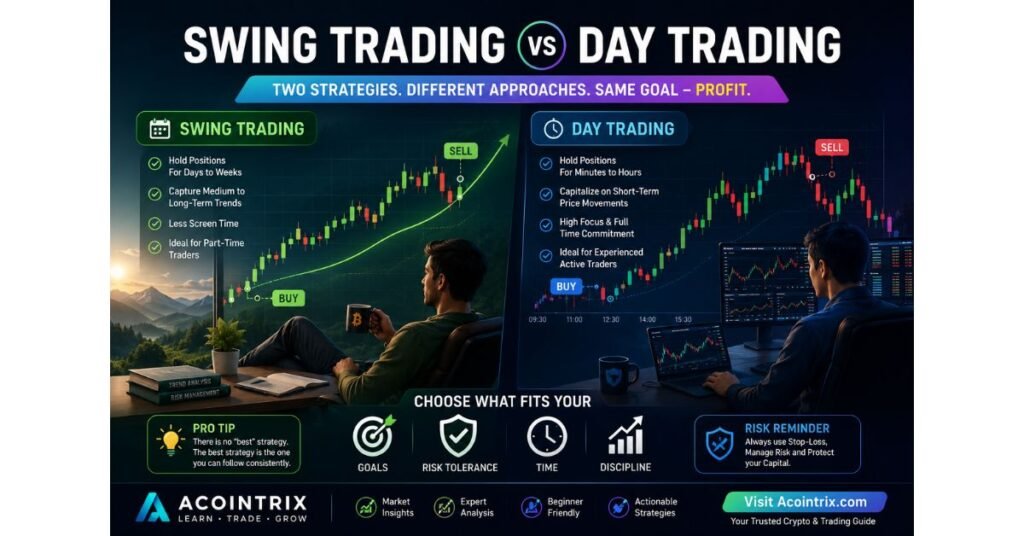
Successful trading isn’t just about making profits—it’s about protecting your capital.
Always:
- Use stop-loss orders.
- Risk only a small percentage of your capital per trade.
- Avoid emotional decisions.
- Maintain a trading journal.
- Never invest money you can’t afford to lose.
🪜 Step-by-Step Guide
For Swing Trading
- Identify the market trend.
- Find strong support and resistance levels.
- Confirm signals with technical indicators.
- Enter the trade.
- Set stop-loss and target levels.
- Monitor the position over several days.
For Day Trading
- Choose a liquid market.
- Check economic news and events.
- Identify intraday opportunities.
- Enter with a clear plan.
- Exit before market close.
- Review your trades daily.
📚 Small Case Study
Investor A (Swing Trader)
Bought Solana during a market pullback and held the position for 10 days. As the market recovered, the trader exited with a healthy profit while spending limited time monitoring charts.
Investor B (Day Trader)
Executed multiple Bitcoin trades during a volatile trading session. Some trades were profitable, while others resulted in losses. By the end of the day, disciplined risk management helped preserve overall gains despite the market’s rapid fluctuations.
📈 Current Trends in 2026
Trading continues to evolve with technology. Popular trends include:
- AI-assisted market analysis
- Algorithmic trading
- Automated trading bots
- Copy trading platforms
- Mobile-first trading apps
- Advanced risk management tools
These innovations make trading more accessible but also require traders to stay informed and disciplined.
❌ Common Mistakes
- Trading without a plan
- Ignoring stop-loss orders
- Overtrading
- Using excessive leverage
- Chasing losses
- Letting emotions drive decisions
- Skipping risk management
💡 Pro Tips
- Master one strategy before trying another.
- Focus on consistency instead of quick profits.
- Keep learning through books, courses, and market analysis.
- Review your trades regularly.
- Stay updated with global financial news.
🧠 Expert Quote
“The best traders don’t predict the market—they prepare for every possible outcome through discipline and risk management.”
— Acointrix Research Team
🔮 Future Outlook
With advancements in artificial intelligence, real-time analytics, and automation, both swing trading and day trading will continue to evolve. However, success will always depend on a trader’s knowledge, patience, and ability to manage risk effectively.
❓ Frequently Asked Questions
Is swing trading better than day trading for beginners?
Yes. Swing trading generally requires less time and is often considered more suitable for beginners.
Which trading style is riskier?
Day trading is typically riskier because of frequent trades and short-term market volatility.
Can I start with a small amount?
Yes, but always understand the risks and choose a strategy that aligns with your financial goals and risk tolerance.
Is swing trading suitable for crypto?
Yes. Many cryptocurrency traders use swing trading to capitalize on medium-term price movements.
Do I need to watch charts all day?
Not necessarily. Swing traders usually spend less time monitoring the market than day traders.
Which strategy requires more experience?
Day trading often demands quicker decision-making and a deeper understanding of market behavior.
🏁 Conclusion
Both Swing Trading and Day Trading can be profitable when approached with the right knowledge, discipline, and risk management.
If you’re a beginner or have limited time, Swing Trading may be a better starting point due to its flexibility and lower stress. If you enjoy fast-paced decision-making and can dedicate significant time to market analysis, Day Trading may suit your style.
Ultimately, the best strategy is the one that matches your goals, schedule, and tolerance for risk.
🚀 Learn Smarter with Acointrix
Stay ahead in the world of cryptocurrency and trading with Acointrix.
We publish expert guides, market insights, blockchain education, and beginner-friendly resources to help you make informed decisions.
📈 Explore more crypto guides and stay updated with the latest trends at Acointrix.com.