

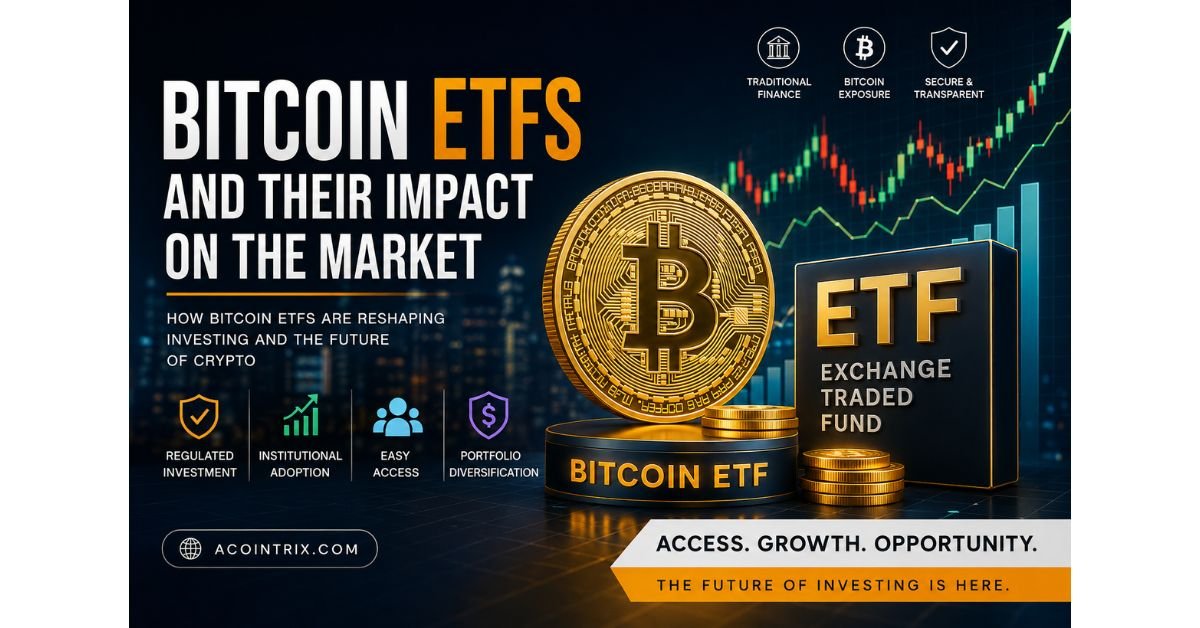
Traditional Finance Meets Cryptocurrency.
Discover how Bitcoin ETFs are making Bitcoin more accessible, attracting institutional investors, and influencing market dynamics worldwide.
Bitcoin Exchange-Traded Funds (ETFs) allow investors to gain exposure to Bitcoin’s price movements on traditional stock exchanges without holding the cryptocurrency directly. They bypass the need for digital wallets or private keys and integrate easily into standard brokerage and retirement accounts.
Introduction
The cryptocurrency industry has evolved dramatically over the past decade, moving from a niche technology embraced by early adopters to a globally recognized asset class. Among the most significant developments in recent years has been the introduction and rapid adoption of Bitcoin Exchange-Traded Funds (ETFs).
Bitcoin ETFs represent a crucial bridge between traditional financial markets and the digital asset ecosystem. By allowing investors to gain exposure to Bitcoin through regulated stock exchanges, these financial instruments have simplified cryptocurrency investing for individuals and institutions alike.
As institutional participation continues to grow and regulatory frameworks mature, Bitcoin ETFs are becoming a major force influencing liquidity, price discovery, adoption rates, and investor sentiment across the broader crypto market.
In this article, we’ll explore Bitcoin ETFs and their impact on the market, including their meaning, features, benefits, risks, market influence, investment considerations, future trends, and expert insights.
Meaning: What Are Bitcoin ETFs?
A Bitcoin ETF (Exchange-Traded Fund) is an investment fund that tracks the price of Bitcoin and trades on traditional stock exchanges, similar to stocks or other ETFs.
Instead of purchasing and storing Bitcoin directly through a cryptocurrency exchange, investors can buy shares of a Bitcoin ETF using their regular brokerage accounts.
This provides exposure to Bitcoin’s price movements without requiring investors to:
- Create crypto wallets
- Manage private keys
- Handle blockchain transactions
- Worry about asset custody
Bitcoin ETFs are generally categorized into:
Spot Bitcoin ETFs
These funds hold actual Bitcoin as the underlying asset.
Bitcoin Futures ETFs
These funds invest in Bitcoin futures contracts rather than holding Bitcoin directly.
Key Points
- Bitcoin ETFs provide regulated access to cryptocurrency markets.
- They eliminate the complexity of self-custody.
- Institutional adoption has increased significantly due to ETFs.
- ETFs contribute to market liquidity and price discovery.
- Regulatory approval has enhanced investor confidence.
- They can influence Bitcoin’s price through large capital inflows.
- Investors should still understand associated risks.
Features of Bitcoin ETFs
1. Regulated Investment Vehicle
Bitcoin ETFs operate under financial regulatory oversight, providing greater transparency and investor protection.
2. Easy Accessibility
Investors can purchase ETF shares through standard brokerage platforms without learning cryptocurrency technology.
3. Institutional Participation
Large financial institutions can gain exposure to Bitcoin within existing compliance frameworks.
4. Portfolio Integration
Bitcoin ETFs can be included in retirement accounts, managed portfolios, and institutional investment strategies.
5. Enhanced Liquidity
ETF trading creates additional liquidity channels for Bitcoin-related investments.
6. Professional Custody
Fund managers handle asset storage and security responsibilities.
Benefits of Bitcoin ETFs
Simplified Investing
Investors can participate in Bitcoin markets without technical barriers.
Increased Market Legitimacy
ETF approval often signals growing regulatory acceptance of digital assets.
Broader Adoption
More retail and institutional investors gain exposure to Bitcoin.
Better Portfolio Diversification
Bitcoin can serve as an alternative asset class within diversified portfolios.
Enhanced Transparency
ETFs provide standardized reporting and regulatory disclosures.
Reduced Security Concerns
Investors avoid direct custody risks associated with holding Bitcoin.
Quick Insights Table
| Factor | Bitcoin ETF |
| Asset Exposure | Bitcoin |
| Trading Platform | Stock Exchange |
| Accessibility | High |
| Regulation | Regulated |
| Custody Responsibility | Fund Provider |
| Liquidity | High |
| Portfolio Integration | Easy |
| Technical Knowledge Needed | Low |
| Risk Level | Moderate to High |
| Investor Suitability | Retail & Institutional |
Small Case Study
How ETFs Expanded Bitcoin Accessibility
Before Bitcoin ETFs became widely available, many traditional investors avoided cryptocurrencies due to concerns about security, wallets, and exchange risks.
Following ETF launches, financial advisors and institutional investors began allocating portions of portfolios to Bitcoin exposure through regulated investment products.
This significantly increased participation from investors who previously remained on the sidelines.
Bitcoin ETFs and Their Impact on the Market
1. Increased Institutional Capital
One of the biggest impacts of Bitcoin ETFs is the influx of institutional capital.
Pension funds, hedge funds, wealth management firms, and family offices can now invest through familiar financial products.
This expands demand and increases overall market participation.
2. Improved Market Liquidity
Higher trading activity generally improves liquidity.
More buyers and sellers contribute to smoother market operations and reduced transaction friction.
3. Enhanced Price Discovery
As ETFs attract broader participation, market prices become influenced by a larger pool of investors, potentially leading to more efficient price discovery.
4. Mainstream Adoption
ETFs help normalize Bitcoin as a legitimate investment asset.
Many investors who previously avoided cryptocurrencies now view Bitcoin through a familiar investment framework.
5. Regulatory Confidence
ETF approvals often indicate growing regulatory acceptance.
This can improve investor sentiment and encourage further innovation within the cryptocurrency industry.
6. Potential Reduction in Volatility
While Bitcoin remains volatile, increased institutional participation may contribute to more mature market behavior over time.
Real Example / Case Study
Institutional Adoption Through Bitcoin ETFs
Following the approval and launch of major Bitcoin ETFs, billions of dollars flowed into regulated Bitcoin investment products.
This demonstrated strong demand from investors seeking crypto exposure without directly holding digital assets.
The result was increased trading volume, greater media attention, and expanded institutional participation in the broader cryptocurrency ecosystem.
Risks of Bitcoin ETFs:
Their advantages, Bitcoin ETFs carry several risks.
Market Volatility
Bitcoin remains highly volatile and can experience significant price fluctuations.
Regulatory Changes
Future regulations may affect ETF operations and investor demand.
Tracking Error
Some ETFs may not perfectly mirror Bitcoin’s price movements.
Management Fees
ETF investors pay expense ratios that reduce overall returns.
Market Sentiment Risk
Investor emotions and macroeconomic events can heavily influence performance.
Liquidity Risks
Although generally liquid, extreme market conditions may impact trading efficiency.
Responsible Investing Considerations
Before investing in Bitcoin ETFs:
- Conduct independent research.
- Understand your risk tolerance.
- Diversify your portfolio.
- Avoid investing based on hype.
- Consider long-term objectives.
- Monitor regulatory developments.
- Consult financial professionals when necessary.
Responsible investing remains essential regardless of asset class.
Why Bitcoin ETFs Matter
Bitcoin ETFs represent a major milestone in the evolution of digital assets.
They Matter Because They:
- Connect traditional finance and crypto.
- Increase institutional participation.
- Expand accessibility.
- Improve market transparency.
- Encourage mainstream adoption.
- Support long-term ecosystem growth.
Their existence demonstrates growing confidence in Bitcoin as a recognized investment asset.
Current Trends in Bitcoin ETFs
Growing Institutional Demand
Large investment firms continue to increase crypto exposure.
Expansion of Spot Bitcoin ETFs
Spot ETFs have gained significant investor interest.
Increased Regulatory Clarity
Governments and regulators are gradually developing clearer frameworks.
Integration with Traditional Finance
Banks, advisors, and wealth managers are increasingly incorporating Bitcoin-related products.
Global Adoption Growth
More countries are exploring crypto-friendly investment structures.
Common Mistakes Investors Make
- Investing without understanding Bitcoin.
- Following social media hype.
- Ignoring ETF fees.
- Concentrating too much capital in one asset.
- Expecting guaranteed returns.
- Neglecting long-term investment planning.
Pro Tips Bitcoin ETFs
Start Small
Begin with an allocation that matches your risk profile.
Think Long-Term
Avoid emotional reactions to short-term volatility.
Compare ETF Structures
Review Fees
Understand whether the ETF is spot-based or futures-based.
Lower expenses can improve long-term returns.
Stay Educated
Follow developments in both crypto and financial markets.
Expert Quotes
Bitcoin ETFs represent a significant step toward mainstream cryptocurrency adoption.”
“Institutional participation through ETFs may continue shaping the future of digital asset markets.”
“Regulated investment vehicles help bridge the gap between traditional finance and emerging technologies.”
Risk
Market Volatility: Bitcoin can move 10%+ in a day; plan for deep drawdowns.
Tracking Error: More pronounced in futures products; also affected by fees and frictions.
Regulatory Shifts: Rule changes or enforcement actions can affect operations or demand.
Custody and Counterparty: While robust, not risk-free; insurance caps and operational incidents are possible.
Liquidity Crunch: In stressed markets, spreads can widen and discounts/premiums can appear.
Tax Complexity: Short-term gains, wash sales (jurisdiction-specific), and fund distributions impact after-tax returns.
Responsible Investing
Suitability: Ensure alignment with risk tolerance, time horizon, and financial goals.
Position Sizing: Start small; scale via pre-defined rules, not emotions.
Rebalancing: Trim after rallies, add after pullbacks within your bands.
Documentation: Keep an investment policy statement (IPS) noting purpose and constraints.
Education: Understand crypto market hours, custody norms, and ETF plumbing.
Why Bitcoin ETFs Matter
- Accessibility: Lower barriers help democratize exposure to a new asset class.
- Market Maturity: ETFs and their ecosystem (APs, custodians, auditors) professionalize crypto access.
- Portfolio Construction: Even small allocations can shift risk/return profiles meaningfully.
- Regulatory Signal: Approvals in major markets reflect evolving oversight and acceptance.
Step-by-Step Guide: How to Evaluate a Bitcoin ETF
- Clarify Objective
- Long-term allocation or short-term trade? Taxable or tax-advantaged account?
- Choose Structure
- Prefer spot ETFs for long-term holds; consider futures-based only for tactical or hedged strategies.
- Compare Costs
- Expense ratio first; then implicit costs (spreads, roll for futures).
- Examine Liquidity
- Look at average daily volume, bid/ask spreads, and historical creations/redemptions.
- Review Tracking Quality
- Check tracking difference and volatility vs. spot Bitcoin over multiple windows.
- Assess Custody and Governance
- Custodian reputation, cold storage, insurance, attestations, and board oversight.
- Plan Execution
- Use limit orders; avoid the first/last 15 minutes when spreads may be widest.
- Integrate into Portfolio
- Set target weights, bands, and rebalancing cadence; document triggers.
- Monitor and Adjust
- Reassess fees, tracking, and regulatory context quarterly or semiannually.
Future Outlook
The future of Bitcoin ETFs appears promising as institutional interest and regulatory acceptance continue to evolve.
Potential developments include:
- Greater institutional adoption.
- More diversified crypto ETF products.
- Enhanced regulatory clarity.
- Broader global availability.
- Increased integration into retirement and wealth management portfolios.
Bitcoin ETFs may play a pivotal role in shaping the next phase of cryptocurrency market maturity.
Conclusion
Bitcoin ETFs have fundamentally changed how investors access cryptocurrency markets. By combining the accessibility of traditional finance with exposure to digital assets, they have opened the door for broader participation from both retail and institutional investors.
While they offer numerous benefits, including convenience, regulation, and portfolio integration, investors must remain aware of risks such as volatility, fees, and regulatory uncertainty.
As adoption continues to grow, Bitcoin ETFs are likely to remain one of the most influential developments in the evolution of digital finance, helping bridge the gap between conventional investing and the future of decentralized assets.
FAQ Section
What is a Bitcoin ETF?
A Bitcoin ETF is an exchange-traded fund that provides exposure to Bitcoin through traditional stock exchanges.
Are Bitcoin ETFs safer than buying Bitcoin directly?
They remove custody complexities but still carry market risks associated with Bitcoin.
Do Bitcoin ETFs own actual Bitcoin?
Spot Bitcoin ETFs generally hold actual Bitcoin, while futures ETFs hold derivative contracts.
Can beginners invest in Bitcoin ETFs?
Yes. They are designed to simplify access to Bitcoin exposure.
Are Bitcoin ETFs regulated?
Yes. They operate under financial regulatory frameworks applicable in their jurisdictions.
Do Bitcoin ETFs affect Bitcoin prices?
Large inflows and institutional demand can influence market dynamics and price movements.