
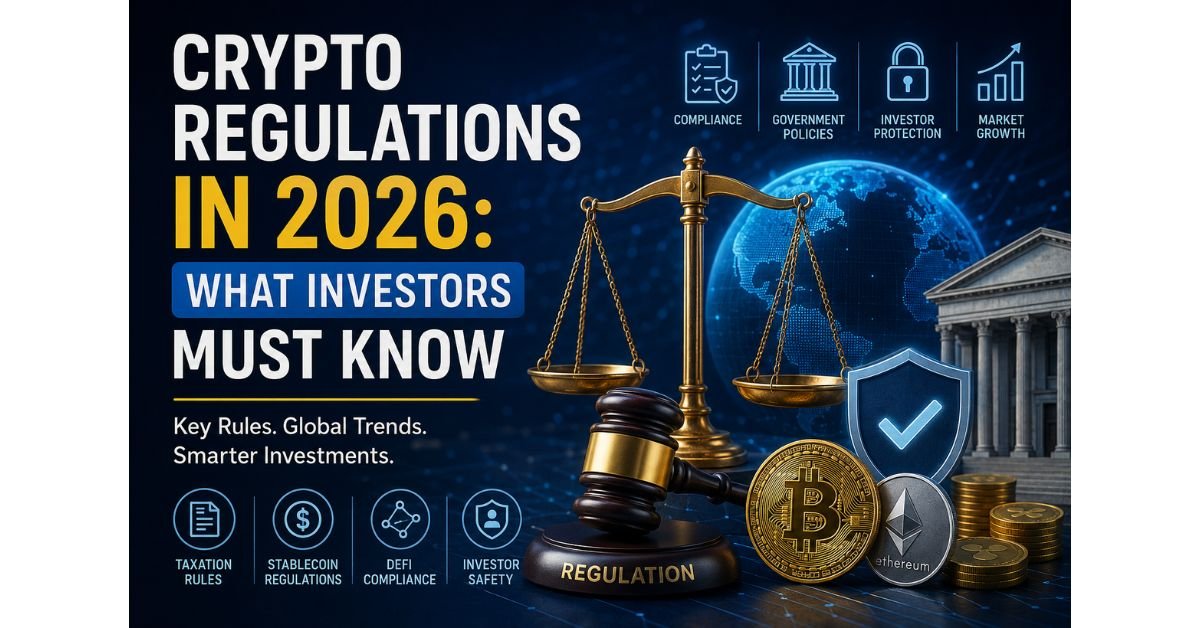
The cryptocurrency industry is entering a new era in 2026. What began as a decentralized financial revolution is now becoming a globally regulated digital asset ecosystem. Governments, financial institutions, and regulatory authorities across the world are actively introducing clearer rules for cryptocurrencies, stablecoins, decentralized finance (DeFi), and blockchain-based assets.
For investors, traders, businesses, and crypto startups, understanding crypto regulations in 2026 is no longer optional — it is essential. Regulatory frameworks are shaping how people buy, sell, store, and use digital assets. Countries are focusing on investor protection, anti-money laundering compliance, taxation, and stablecoin oversight while simultaneously encouraging blockchain innovation.
As cryptocurrencies continue gaining mainstream adoption, investors who stay updated with regulatory developments will have a significant advantage in managing risk and identifying long-term opportunities.
Why Crypto Regulations Matter in 2026
The rapid growth of Bitcoin, Ethereum, stablecoins, NFTs, and DeFi platforms over the past decade has attracted millions of users worldwide. However, the absence of clear regulations previously created concerns related to fraud, market manipulation, scams, and investor protection.
In 2026, regulators are aiming to create a safer and more transparent crypto ecosystem. Governments now recognize that cryptocurrencies are no longer a niche technology but a significant component of the future financial system.
Key Reasons Governments Are Regulating Crypto
- Preventing financial crimes and money laundering
- Protecting retail investors from scams and fraud
- Regulating stablecoins and digital payments
- Increasing tax transparency
- Encouraging institutional adoption
- Creating legal clarity for blockchain companies
- Strengthening cybersecurity standards
Clear regulations are also helping major financial institutions enter the crypto market with greater confidence.
Global Crypto Regulation Trends in 2026
Different countries continue to approach cryptocurrency regulations differently, but several major global trends are emerging in 2026.
1. Stronger KYC and AML Compliance
Most cryptocurrency exchanges now require strict Know Your Customer (KYC) verification and Anti-Money Laundering (AML) compliance.
Users are increasingly required to provide:
- Government-issued ID verification
- Proof of address
- Transaction monitoring compliance
- Source of funds verification
This shift aims to reduce illegal activities and improve transparency within the crypto ecosystem.
2. Stablecoin Regulations Are Tightening
Stablecoins have become a major focus for regulators worldwide. Governments want stablecoin issuers to maintain proper reserves, undergo audits, and comply with banking standards.
Popular stablecoins are now expected to:
- Maintain transparent reserve backing
- Publish regular audits
- Follow payment compliance laws
- Meet capital reserve requirements
Stablecoin regulation is expected to improve trust and encourage wider adoption for digital payments and cross-border transactions.
3. Taxation on Crypto Investments
Crypto taxation has become stricter in 2026. Governments are implementing advanced tracking systems to monitor digital asset transactions.
Tax authorities now focus on:
- Capital gains tax reporting
- Crypto-to-crypto transaction tracking
- NFT taxation
- DeFi income reporting
- Staking and yield farming income
Investors must maintain detailed transaction records to remain compliant with tax laws.
4. Institutional Crypto Adoption Is Increasing
Regulatory clarity has encouraged banks, hedge funds, and financial institutions to invest heavily in cryptocurrency markets.
Institutional adoption is driving:
- Bitcoin ETFs growth
- Tokenized asset investments
- Blockchain banking integration
- Enterprise blockchain development
- Crypto custody services
This institutional participation is improving market stability and credibility.
Major Countries Leading Crypto Regulation in 2026
United States
The United States continues refining its cryptocurrency framework through collaboration between financial regulators and lawmakers.
Major focus areas include:
- Stablecoin oversight
- Securities classification
- Exchange licensing
- Consumer protection
- Crypto tax reporting
The U.S. market remains one of the most influential regions shaping global crypto policies.
European Union
The European Union has become one of the most structured crypto-regulated regions through its Markets in Crypto-Assets (MiCA) framework.
MiCA regulations focus on:
- Exchange licensing
- Stablecoin compliance
- Investor transparency
- Market abuse prevention
- Crypto service provider regulations
This framework provides legal clarity for crypto companies operating within Europe.
India
India continues balancing innovation with regulation. The government is gradually improving crypto oversight while promoting blockchain development.
India’s crypto regulation priorities include:
- Taxation compliance
- Exchange monitoring
- Prevention of illegal transactions
- Blockchain innovation support
- Digital Rupee expansion
The country remains one of the largest crypto adoption markets globally.
United Arab Emirates (UAE)
The UAE has positioned itself as a global crypto hub by introducing business-friendly regulations and dedicated virtual asset licensing systems.
Dubai and Abu Dhabi continue attracting:
- Crypto startups
- Blockchain companies
- Web3 innovators
- Global crypto exchanges
The UAE’s approach combines innovation support with regulatory compliance.
How Crypto Regulations Affect Investors
Crypto regulations in 2026 are directly influencing investor strategies, portfolio management, and trading practices.
Increased Security and Investor Protection
One of the biggest benefits of regulation is improved investor protection. Licensed exchanges now follow stricter operational standards.
Benefits include:
- Reduced scam risk
- Better fund security
- Insurance protections
- Transparent operations
- Improved dispute resolution
This creates greater trust in the crypto market.
Reduced Anonymity
The era of completely anonymous cryptocurrency investing is gradually declining.
Most platforms now require:
- Identity verification
- Transaction tracking
- Compliance reporting
While this improves security, some users remain concerned about privacy limitations.
More Market Stability
Institutional participation and regulatory oversight are reducing extreme volatility in certain crypto sectors.
As regulations mature:
- Long-term investor confidence improves
- Market manipulation decreases
- Large-scale adoption increases
- Financial products become more reliable
This may support sustainable growth in the crypto industry.
Compliance Responsibilities for Investors
Modern crypto investors must now understand:
- Tax obligations
- Reporting requirements
- Exchange compliance rules
- Wallet security practices
Failure to comply with regulations may lead to penalties or legal complications.
The Rise of Central Bank Digital Currencies (CBDCs)
Many governments are introducing Central Bank Digital Currencies (CBDCs) alongside crypto regulations.
CBDCs are government-backed digital currencies designed to modernize financial systems while maintaining central control.
Key Features of CBDCs
- Faster payments
- Lower transaction costs
- Financial inclusion
- Improved monetary control
- Digital payment innovation
Countries including China, India, and several European nations continue expanding CBDC initiatives in 2026.
CBDCs are expected to coexist with cryptocurrencies rather than completely replace them.
DeFi Regulations in 2026
Decentralized Finance (DeFi) remains one of the most challenging sectors for regulators.
DeFi platforms operate without traditional intermediaries, making regulation complex.
Governments are focusing on:
- Smart contract audits
- AML compliance
- Investor risk disclosures
- DeFi platform accountability
- Stablecoin integration
Some DeFi projects are adapting by introducing hybrid compliance models while preserving decentralization principles.
NFT and Metaverse Regulations
NFTs and metaverse assets continue evolving under new legal frameworks.
Regulators are examining:
- Intellectual property rights
- Digital ownership verification
- NFT taxation
- Fraud prevention
- Consumer protection
Gaming NFTs, virtual land ownership, and tokenized digital assets remain popular despite tighter oversight.
Best Practices for Crypto Investors in 2026
To navigate the evolving regulatory environment successfully, investors should follow strategic best practices.
1. Use Regulated Exchanges
Choose licensed and compliant cryptocurrency exchanges with strong security measures.
Look for:
- Regulatory approvals
- Insurance protections
- Transparent operations
- Strong security infrastructure
2. Maintain Tax Records
Track all:
- Trades
- Profits
- Losses
- NFT sales
- Staking rewards
Using crypto tax software can simplify reporting.
3. Diversify Investments
Avoid relying on a single cryptocurrency or platform.
Diversification across:
- Bitcoin
- Ethereum
- Stablecoins
- Blockchain infrastructure projects
- Web3 ecosystems
can help reduce risk.
4. Stay Updated on Regulations
Crypto regulations evolve rapidly.
Investors should regularly monitor:
- Government announcements
- Exchange policy changes
- Tax regulations
- Global crypto news
Being informed helps avoid unexpected compliance issues.
The Future of Cryptocurrency Regulation
The Future of Cryptocurrency Regulation
The future of crypto regulation in 2026 and beyond appears focused on balance — supporting innovation while protecting investors.
Key future trends may include:
- Global regulatory cooperation
- Unified crypto tax frameworks
- Expanded institutional participation
- Stronger DeFi oversight
- AI-powered compliance systems
- Cross-border blockchain regulations
As the industry matures, regulations may ultimately strengthen crypto adoption by improving trust, transparency, and market stability.
Conclusion
Cryptocurrency regulations in 2026 are reshaping the digital asset industry at a rapid pace. Governments worldwide are introducing clearer frameworks to protect investors, improve transparency, and encourage responsible innovation.
For investors, understanding crypto regulations is now essential for long-term success. From taxation and exchange compliance to stablecoin oversight and DeFi governance, regulatory awareness can significantly impact investment strategies and financial security.
While regulations may introduce additional compliance responsibilities, they are also helping legitimize the crypto market and attract institutional capital. As blockchain technology continues evolving, investors who stay informed and adapt to changing regulations will be better positioned to capitalize on future opportunities.
The future of cryptocurrency is no longer just about technology — it is also about regulation, trust, and sustainable global adoption
Frequently Asked Questions (FAQs)
Is cryptocurrency legal in 2026?
Cryptocurrency legality varies by country. Many nations allow crypto trading under regulated frameworks, while others impose restrictions or stricter compliance requirements.
Do crypto investors pay taxes in 2026?
Yes. Most countries now require cryptocurrency investors to report profits, trading activity, staking rewards, and digital asset income for taxation purposes.
Are stablecoins regulated in 2026?
Yes. Stablecoin regulations have become significantly stricter, focusing on reserve transparency, audits, and financial compliance standards.
How can investors stay compliant with crypto regulations?
Investors should use regulated exchanges, maintain transaction records, follow tax laws, and stay updated on government regulations.
Will regulations help cryptocurrency adoption?
In many cases, yes. Clear regulations improve investor confidence, attract institutions, and reduce fraud risks, supporting long-term industry growth.